- +923003027992
- info@gbf.org.pk
- Abdullah Center Qasimabad, Hyderabad
Category
Activities and its impact
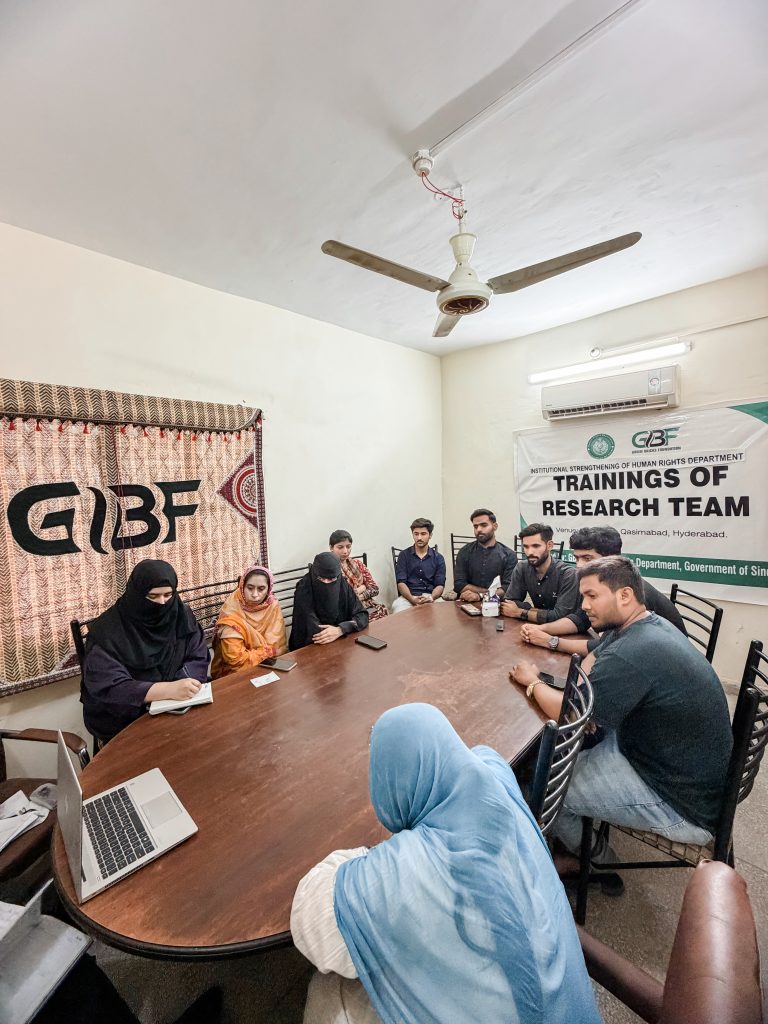
Green Brick Foundation organized a technical guidance session to strengthen the capacity of the project contribution team responsible for developing Human Rights Resolution Case Studies and project publications. The activity aimed to improve the quality of documentation by promoting evidence-based writing, ethical reporting, and standardized publication practices that capture the realities of vulnerable communities, particularly brick kiln workers across Sindh.
The session brought together project staff, documentation and publication team members, researchers, university students, human rights and labour rights experts, communication officers, monitoring and evaluation staff, and field coordinators from nine districts of Sindh. Participants shared field experiences and discussed practical approaches for documenting human rights issues related to bonded labour, child labour, forced labour, decent working conditions, fair wages, women's empowerment, violence against women and children, and access to justice.
The guidance focused on developing professional case studies, success stories, policy briefs, research summaries, and other knowledge products. Participants learned how to organize information logically, verify facts, collect evidence, and write in clear and simple language for a wide range of audiences. Special emphasis was placed on ethical documentation, including obtaining informed consent, protecting confidentiality, respecting the dignity of survivors, and ensuring that sensitive information is handled responsibly.
Interactive discussions enabled participants to review standard publication formats and improve their understanding of documenting successful interventions, challenges, lessons learned, and policy recommendations. The session also highlighted the importance of producing reliable publications that support advocacy, public awareness, institutional learning, and evidence-based policymaking. Participants recognized that well-documented case studies not only showcase project achievements but also provide practical evidence to guide future programmes and strengthen coordination among government departments, civil society organizations, academic institutions, and development partners.
As a result of the activity, participants strengthened their skills in professional documentation, evidence-based writing, fact verification, and quality assurance. The session also contributed to the development of standardized publication practices across the project, ensuring greater consistency, accuracy, and credibility of reports and communication materials. Improved collaboration among research, field, documentation, and communication teams further enhanced the process of collecting, reviewing, and presenting project information.
The activity also identified key challenges, including limited availability of complete field documentation, difficulties in verifying information from multiple sources, the sensitive nature of bonded labour and child labour cases, and the need for continuous technical guidance. Participants emphasized that maintaining ethical standards and strengthening field documentation are essential for producing reliable and impactful publications.
The guidance session reinforced the importance of high-quality knowledge products in promoting human rights, influencing policy reforms, and strengthening institutional capacity. The publications developed through the project will serve as valuable resources for advocacy, research, awareness raising, and future programming while contributing to evidence-based decision-making and the protection of the rights and dignity of brick kiln workers and other vulnerable communities across Sindh.
About Us
GBF promotes social justice, child protection, youth empowerment, human rights, and education through advocacy and partnerships, ensuring dignity, freedom, and opportunities for marginalized and vulnerable communities.
Our Foundation
Follow Us On
Address : B-35, Abdullah Villas, Qasimabad Phase-1 Hyderabad
Phone :+923003027992
Mail : info@gbf.org.pk
Useful Links
Design & Developed by Hysec | Visit: www.hysec.com.pk